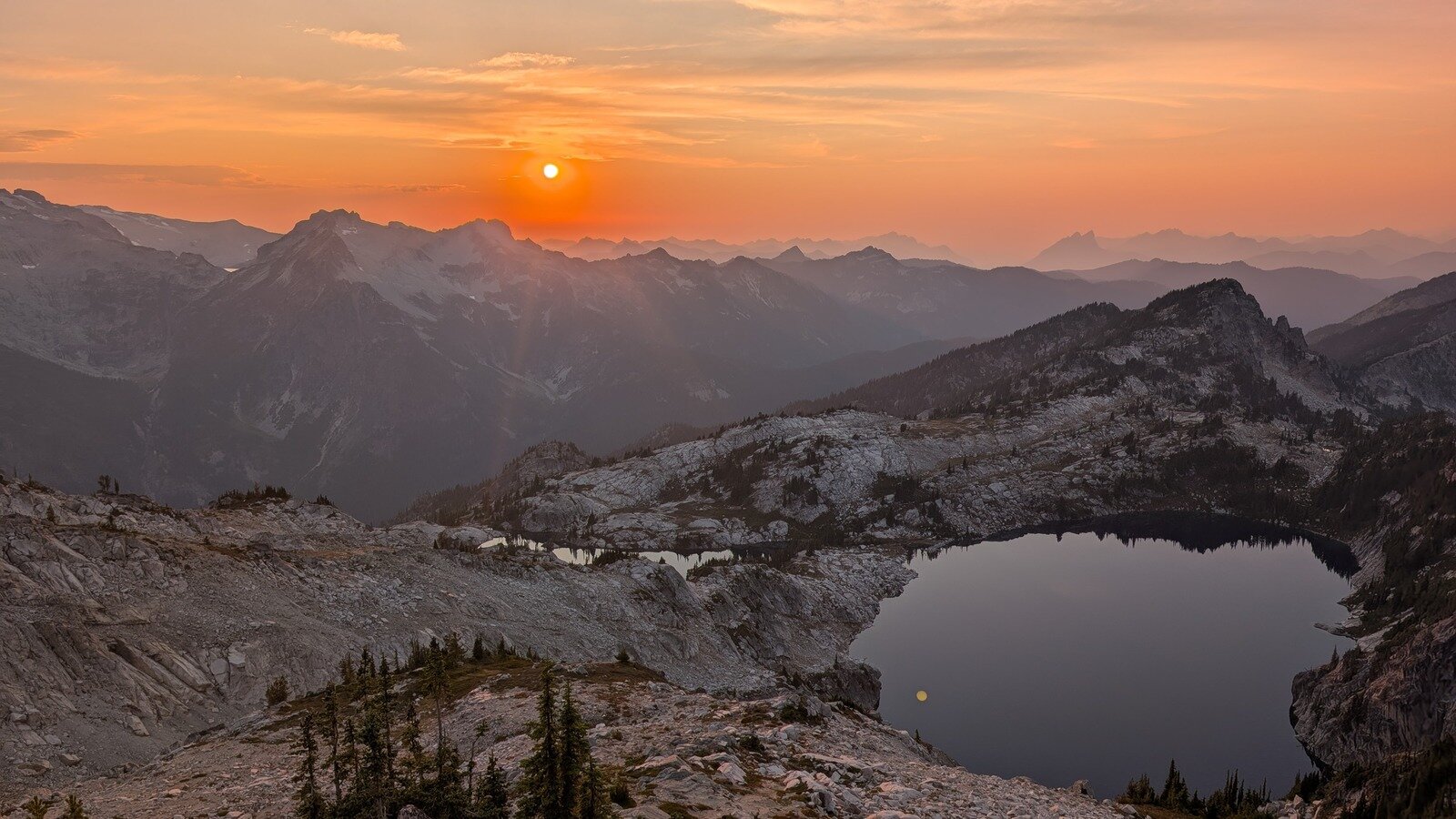
This picture was taken exactly one year ago today.
Two weeks before this picture was taken, I quit my job as a software engineer. Then, on October 15th, 2024, I got on a plane to Taiwan. I didn’t know how long I’d be gone for. I didn’t even know all the places I’d end up.
Now here I find myself exactly 365 days later in San Sebastian, Spain. Given it’s been exactly one year to the day today, it feels like a good time to reflect. To reflect on what I’ve learned. To reflect on what I’m taking forward. To reflect on what I wish someone would have told me beforehand. …
That day was a special one. I realized how much I’d learned over the past year and sat with a kaleidoscope of emotions as I prepared for my season of travel to end the following week.
This piece is an expansion on my reflections from that day. Hope you enjoy.
Maybe you’ve never left home and a week-long vacation sounds overwhelming. Maybe you’re thinking about leaving a job and traveling on the scale of months, or years. If you’re somebody who wants to travel, whatever travel means to you, this is written to you. That said, keep in mind these are my personal reflections. They come from the perspective of someone (a young, American male) who has freshly spent a year living out of a backpack across 17 countries in 4 continents. So don’t necessarily take them as gospel.
This is not an exhaustive or all-encompassing list. It’s not meant to be a logistical guide on how to plan a trip. It’s more about mindset and mentality, aspects I think can often get overlooked when talking about “how to travel”. Here’s 20 things that I’m thankful somebody told me (or wish someone had) before I left.
1. Have a plan. Be ready to throw it away.
A plan is a great foundation, but it shouldn’t feel like a prison that locks you into rigidity. Flexibility is invaluable in travel (the longer the trip, the more true this becomes). Having a plan allows you to do things when spontaneity might not be playing in your favor. But without flexibility, you risk missing those spontaneous opportunities that, from my experience, create some of the most memorable moments.
At this point, my idea of planning is simply generating ideas. If I were to go to this place, this city, this country, what would I do there? Once you have those ideas, you’ll at least have something to do. But if another option comes your way that sounds more appealing, don’t be afraid to throw your ideas away and jump on a ship sailing a different direction.
2. Know your intentions.
Before I left, I sat down and came up with several priorities that I had for my trip.
Write
Socialize
Build my personal sense of agency
Embrace culture and nature
Move one step at a time
They’re quite vague, intentionally so (if you want the expanded version of those priorities, you can find it in this post I wrote before I left). Some relate to specific activities, and others are more focused around mindset.
Explicitly declaring these priorities sets the tone for your trip before you leave. They inform the decisions you make, the way you choose to spend your time, and help you prioritize experiences that are meaningful to you. Having a range of priorities also helps when circumstances make one or two of them difficult to achieve. For example, when it’s dumping rain all day and there’s not a whole lot to do, it’s easy to feel like the day is a waste. But if spending time at a coffee shop getting to know new friends aligns with a priority of socializing, then even if you do just that, then the day is a win.
Similar to your plan, your intentions should serve as a framework, not as measurements you constantly have to be living up to. Check your alignment on occasion. If the majority of your days align with at least one or two of your priorities, then your trip is going in a direction you want it to.
3. Language is a beautiful tool. Technology is an incredible assistant.
At the end of the day, we’re all just people trying to communicate with each other. We speak different languages, and we’re incredibly lucky to have the tools we do to help us bridge those gaps. If you’ve ever attempted to learn a second language, you’re familiar with the pain of knowing what you want to say and being unable to articulate it. It’s no small commitment to learn a second language well. Extend the same grace you would give yourself in that process to others.
As English speakers, we have a tendency to be the worst at this, because our primary language is the most prominent global language. Don’t get all high and mighty. Be patient with others, both in other countries, as well as at home (there are lots of people who have moved in hope of a better life and they must navigate life in a place that doesn’t speak their mother tongue). If you’re in a country that doesn’t speak your own language, be grateful when people attempt to speak in words you understand, even if it’s broken and “all wrong”. They might not know much, but they are trying to engage as best they can.
Remember the primary goal is communication. Grammar, conjugation, pronunciation, and everything else are far less important. Try to pick up even a few words of a foreign language when you visit somewhere new, it demonstrates you care. But there’s nothing wrong using Google Translate or any other language tools as much as you need.
4. You can go anywhere, and you can do anything. You cannot go everywhere, and you cannot do everything
There are two ways of looking at this.
The first is as a curse. I can’t get to this place or I can’t do that. Now, you’re thinking about everything you aren’t doing instead of appreciating the experience right in front of you. What a bummer.
The second is as an opportunity. An opportunity to plan intentionally. What do I really want to do on this trip? Maybe you have more time than usual. What is something you’ve wanted to do but haven’t had the time for? Maybe you’re in the best shape of your life and want to find a physical challenge for yourself. Frame your trip around what is most important to you right now. It might allow you to go places and do things that you wouldn’t have otherwise considered.
Let the idea that you can’t do everything free you. Keep in mind that you could have an amazing trip in any number of places. There is no perfect place or trip. You will miss things. That’s okay. Focus on what you are doing rather than everything you’re not. You’ll find it much more fulfilling.
5. You’re going to be disappointed.
Sounds strange, right? I thought the same when someone said this to me.
He didn’t mean this as a negative. It was mostly meant as a reminder that travel isn’t the idyllic Instagram reel we see far too often. You’re going to have expectations that aren’t met. You’re going to have challenging moments. You’re going to have times where you miss home and all you want to do is leave.
Don’t worry, you haven’t made some big mistake. You aren’t bad at planning or traveling. These are all very normal experiences, and you’re in good company if you find yourself feeling that way. If you’re prepared for this as a possible reality, it’s much easier to not let one disappointment ruin your entire trip.
6. Don’t place too many expectations on any single experience, place or trip.
Having too high of expectations is a great way to end up disappointed. I know, I know, I just talked about how it’s okay to be disappointed. But just because it’s okay doesn’t mean that’s how you want to spend most of your time.
When I think back to most of my disappointments from this year of travel, they’ve come down to unmet expectations about people, places, or experiences. It was raining the whole time I was in Bali. I didn’t find my new best friend in my tour group. The mountains here are underwhelming, and it was so foggy I couldn’t even see the view.
You get the picture.
We tend to inflate our perception of control. This “control” is, in fact, very fragile. If you don’t know this now, you’ll probably learn it the hard way soon enough. Take what comes as it is, and let everything be a part of the experience. Control what you can, but remember there’s a whole lot outside of your realm of control. If something doesn’t end up being what you anticipated, hey, you might get an even better story about it.
7. You will meet people.
This one is primarily for solo travelers.
It might take longer than you think. You might not be around the people that you really enjoy for as long as you’d like. But that makes every moment you get with those people special. It might be for 24 hours, it might be a week, or it might somehow add up to five weeks in five countries across five months. Whatever time you get, enjoy it. When that time ends, have faith that you will once again meet more people that you get along with.
8. Don’t say no for people.
Once you meet people, you never know where simply asking them a question might lead. Maybe you find an activity buddy for tomorrow. Maybe you get some local recommendations. Maybe you save some money with a free place to stay. Or maybe you wind up with your own personal tour guide on a spontaneous four day backpacking trip to the top of Australia. Without asking, you steal all those potential opportunities away from yourself.
You have connections. Don’t be afraid to use them. You asking a question isn’t a burden on that person or overstepping any sort of boundary. People can say no for themselves, just don’t do it for them. Though, in my experience, people are generally more than likely to say yes when they can.
Hopefully someday, if those people come to my corner of the world, I’ll be able to return the favor.
9. Write about your trip in some way, shape, or form.
Maybe that’s Instagram posts. Maybe that’s YouTube videos. Maybe that’s a private journal. Maybe it’s voice recordings. Maybe for some oddballs like me, it’s an email newsletter. The form doesn’t matter, but the act does. Here’s why.
First, while you’re moving, the next city, activity, or person is always waiting for you. Without being intentional, it’s easy to always focus on what’s coming up next and never take time to process who you’ve met and what you’ve seen. As soon as you stop, there’s no longer anything in front of you (well, immediately at least. Hopefully there’s lots more in front of you further down the road). At that point, you will want to look back. Once you’re home, all you have left of your trip is whatever you took the time to capture. For me, my trip now exists only as a set of memories documented through newsletters, photos and videos. And I’m very grateful I have those to revisit.
Second, let’s talk about photos.
They say a picture is worth a thousand words. This might be true from an efficiency standpoint. I’ll concede that it’s easier to show someone the picture below instead of trying to describe the sunrise from Roy’s Peak in Wānaka, NZ purely through words.
However, pictures fail to convey the full complexity of an experience.
The view above doesn’t mention any of the friends that were there with me. It doesn’t say that we woke up at 4 am and were sleepy and a bit grumpy as we hiked to the top. It doesn’t demonstrate the shivering and huddling together we did at the top to stay warm for 45 minutes before the sun actually rose.
And most importantly, it has no way of sharing the words I said as I walked into Wānaka for the first time.
I could live here.
Words that had never before left my mouth visiting a new city, in which there was no hesitation. A jumbled mix of awe, joy, and even fear overwhelmed me after uttering them, as I realized for the first time, I could envision the reality about living somewhere outside of Seattle.
Thoseare the types of moments I’m glad I have written down.
A picture might be sufficient to remind you of these nuances a week, maybe even a month, after it was taken. But as time passes, the clear memories associated with the image start to cloud and you’re left with a sense of longing to remember rather than the memory itself.
So for your own sake, do more than snapping a few photos. Instead of thinking of words as an aid to your photos, flip the script and think about photos as an aid to your words. Write about what’s important, and expand your visual story through photos. Write some brutally honest words about where you find yourself — ecstatic, lonely, exhausted, homesick, grateful, surprised. Do this on some form of regular cadence, and make it a priority rather than an “if I have time” (my guess is you won’t ever feel like you do).
You’ll have more detailed stories to tell in the future. When you look back, you can remind yourself of all that you moved through, what you’ve learned, and how your travel has changed you. You can transport yourself back to an experience more completely than you could if you only had the pictures.
Whatever form your writing takes, I’d encourage you to make it public so that people can join in with your journey. You might end up with additional recommendations or get connected to someone’s friend they have in the corner of the world you’re in. You might impact someone through sharing your honest feelings and what you’re learning as you go. Just keep in mind the goal of publicizing should never be about showing off, but to honestly document your experience.
10. Your trip is your trip. Don’t try to have somebody else’s.
Speaking of publicizing unnhelpful travel content…
The internet is a great place for gathering inspiration. But these days, in the age of instagram influencers and digital marketing, it seems as though more and more travel content has a title like —
The BEST places to visit in December
The PERFECT 10 Day Thailand Itinerary
5 MUST SEE cities in the United States
You know the ones I’m talking about. These descriptors project a sense of urgency, and make you feel like if you skip any of these TOP 10 Restaurants/Activities/Cities/Countries you’re missing out. You’re doing it wrong.
That’s stupid. How is there any possible way to reduce these types of things down to a single top 10 list or a two week itinerary?
To be clear, I don’t think all travel content is cheap marketing. To some extent, I even agree there are “essential” experiences in certain parts of the world. If you’re in a particular city or a country I’ve spent time in, of course I’m going to give you recommendations of what I would do. But those are inherently biased towards my own priorities and interests, additionally caveated by my very limited time spent in that place.
Who am I to dictate what you will enjoy the most?
There is no BEST. There is no PERFECT. There is no TOP 10. All these words attempt to apply objectivity to an inherently subjective experience.
All this to say, gather inspiration from people, then go make your own decisions. Don’t let someone else dictate your trip. Leave yourself some room for spontaneous decisions like where to eat purely based on walking down the road and finding the first restaurant that smells good. And remember #2. If your itinerary doesn’t reflect your priorities, it might need some re-working.
11. The number of meaningful experiences you have is of far more importance than the number of countries or cities that you visit.
This goes back to #4. Sometimes the faster you move the less you get to take in. There’s a balance that you have to find that works for yourself. Remember to focus on creating experiences and memories rather than seeing as many places as possible.
As a bonus, when you frame travel through the lens of experiences, your own backyard becomes an equally incredible travel destination as any other place in the world. There’s no “distance away from home” requirement for making memories.
12. The vast majority of the time, your problem is not that big of a deal.
You might lose a little bit (or a lotta bit) of money. You might fall behind your schedule and have to cut a city you planned to stay in. You might miss a plane, or a train, or a boat, and find yourself in a stressful situation. You might get severe food poisoning at the start of a three day hike, spend every hour not hiking between your bed and the toilet, and find yourself bedridden for three more afterward trying to recover. Your phone might die when you’re on a bike in the middle of nowhere and leave you disconnected from the internet in a country where you don’t speak the language and you have to navigate. Hypotheticals, you know?
And though they suck in the moment, you find your way out of all of these things. It’s going to be ok. As long as your safety is not compromised, there’s a very high chance you can find a solution to your problem. Take a deep breath (or a few), have some patience, use your brain, and remember – it’s okay to ask other people for help (See #3 and #8).
13. Trust yourself. Question yourself. Learn to trust yourself more.
One of the coolest experiences about solo traveling is that you get to make all of your own decisions. You get to sit with your own emotions and how you feel, where you want to be, where you want to go, how long you want to stay in a place, what you want to do. You have to learn to trust yourself in those feelings. That said, don’t always take them at face value. Play with them, investigate them, question them. And as you do that, you’ll learn to trust yourself a little bit more.
14. Don’t try to “find yourself”. Instead, simply learn about yourself.
I’m going to find myself is cliche, vague, and unhelpful. I’m going to take every opportunity to learn about myself is proactive, intentional, and practical.
No matter how well you understand yourself, traveling will put you in situations that will test that. Take a posture of reflection. You’ll learn more about who you are, how you operate, what you like, what you don’t like, how you handle stress, what it looks like for you to calm yourself down in those situations, how you engage with people, where you’re at your best. The list goes on and on if you’re willing to keep digging.
The danger with the find yourself approach is it’s too often passive. We like to think God’s job is to present life-altering revelations via bold-print banners flown by a blimp through the sky that are impossible to miss. If that’s your expectation of how you’re going to find yourself, I’ve got bad news. You might find yourself more lost than you started.
So don’t overcomplicate it, and don’t put too much pressure on it. If you choose to reflect on yourself while you travel (well-suited content for #9 if you ask me), you will walk away from your trip with greater intuition, self-awareness, and emotional intelligence. All of which will apply throughout your entire life and serve as critical steps towards becoming the person you were created to be. And in even better news, you don’t have to be traveling to continue learning about yourself.
15. This is not your last trip.
This is true 99% of the time. When I started planning my indefinite adventure, I put far too much pressure on trying to fit everything in like this was the last trip I’d ever get to take at the old age of 27. It took me a while to remember this, so hopefully I can remind you sooner.
You can always go to a new place later. If you love a place, you can always go back. (And remember #4)
16. No matter where you are from, home is a very special place.
Home is a very special place because it is where your community is. And your community is incredibly valuable. It’s been a long time since I have had a stable community. I didn’t realize how much it would impact me until months later. I realized that I took my community at home for granted, and more than anything else this is how I could tell I was ready to be back home. I wanted to be back with my people.
Don’t take your own community for granted. If that’s something you feel you’re missing, go out and build it for yourself.
17. Don’t be too rigid with identity statements, especially negative ones.
There’s no way I would ever summit a 6000m mountain.
I’m not good at starting conversations with people I don’t know.
If it looks funky, smells funky, or I don’t know what it is, I’m not eating it.
All statements explicitly uttered or implicitly felt by myself or people I met in the past year.
If it’s a moral issue, don’t compromise there, those aren’t the type of identity statements I mean. But if it’s not a moral issue, open yourself up a little bit more. Give some activities or foods a go you wouldn’t normally consider. You might surprise yourself. You might learn something new about yourself (see #14). Worst case scenario, you try chicken feet, they’re as crunchy and chewy and gross as you thought they would be, you somehow choke them down and resolve never to eat them again, and you move on. At least now you’ve got a story to tell. No harm, no foul.
18. Be curious about culture.
We (I) have an unhelpful habit of seeing something that is different and immediately treating it as bad. One of the great opportunities of travel is breaking that bad habit. Step into a new culture. Don’t try to change anything. Don’t pronounce judgement. Instead, observe what life looks like. Take a posture of curiosity and try to learn from what you see that is new and different.
Why does this place do this a certain way?
What does this cultural norm tell me about the values of people here?
At home, we’re inundated with the way we always do things. We can often fall into the trap of doing what is familiar, even if that isn’t serving us well. Asking these types of questions allows us to return home and confront our own cultural norms with a more critical lens. I’ve found that some practices I believed to be “normal” and “good” at home actually can create deficiencies in myself and others around me (cough…work/hustle culture in the United States…cough. Excuse me.). Exposing ourselves to different cultures allows us to build our own lives more intentionally, and craft a life that centers around our own values rather than unconsciously adopting the values fed to us by our own cultures from birth.
Everyone has something to teach you. You might not necessarily agree with them. That’s okay. Just don’t cut them off without giving them a chance to speak.
19. The world is incredibly wide, incredibly wonderful, and incredibly beautiful. Be grateful for the corners you get to see.
Every trip that you get to take is a special opportunity. It’s an opportunity that everyone should have, but few do. It is a privilege and it is a luxury to be able to travel.
That’s not a guilt trip. That’s not meant to say other people can’t travel, therefore I should not travel. But it is something that’s important to recognize. My hope is that we never travel with a sense of entitlement, but rather that we enter humbly into the communities and places we visit. That we experience others’ culture the way that do instead of imposing our own cultural standards upon them (see #18).
Also keep in mind that not every trip has to be far from home (see #11). In some ways, travel isn’t any particular destination. It’s a mindset. It’s a way of life. It’s a way of discovering diversity and beauty wherever you are, whether that’s halfway across the world, or sitting on your front porch looking at the fall trees change color. There is beauty in every corner of the world if you’re willing to look for it.
And finally,
20. It’s okay to not know what comes next.
This is where I find myself today. My extended season of travel has rapidly come to a close. I’m back at home. I don’t have a job. I don’t have an apartment, only a room in my parents’ basement (which I am very grateful for). I don’t even know if I’ll end up back in Seattle.
But that’s okay. Remember #12. Everything eventually will reveal itself in time. I’d choose this uncertainty any day over never quitting my job because I was scared about not knowing what would come next.
And even if what’s next ends up looking eerily similar to life before your trip, it was still worth it.
There’s a fear there I held for a long time. I was expecting to have my trip lead to some miraculous change that dramatically altered the trajectory of my life. It’s simply not a fair expectation to have (see #6, #14) and it took me a while to come to peace with that. Plus, even if things might look exactly the same externally, I can tell you for a fact that they are not the same internally. And from many people that I have met amongst this year of travel, I can safely say the same for them. So if you find yourself here, you’re far from alone. Welcome to the club.
To Close
That’s what I’m sitting with as I look back on my travels this past year. I hope you’ve found something to comfort you, inspire you, perhaps help you break down an unhelpful belief about travel. If you want to explore any specific moments from my year abroad (with more ad-hoc reflections included), you can visit my newsletter archive (through #33).
So that’s that. Be grateful when you get to travel. Enjoy it. See the world. See your home in a new way. Try new things. Learn about yourself. What a wonderful opportunity it is to live in the world that we do and explore as much of it as we are able to.
I’d love to hear your own travel wisdom in the comments below.